How can Europe accelerate climate resilience and can Nordic insights help show the way?
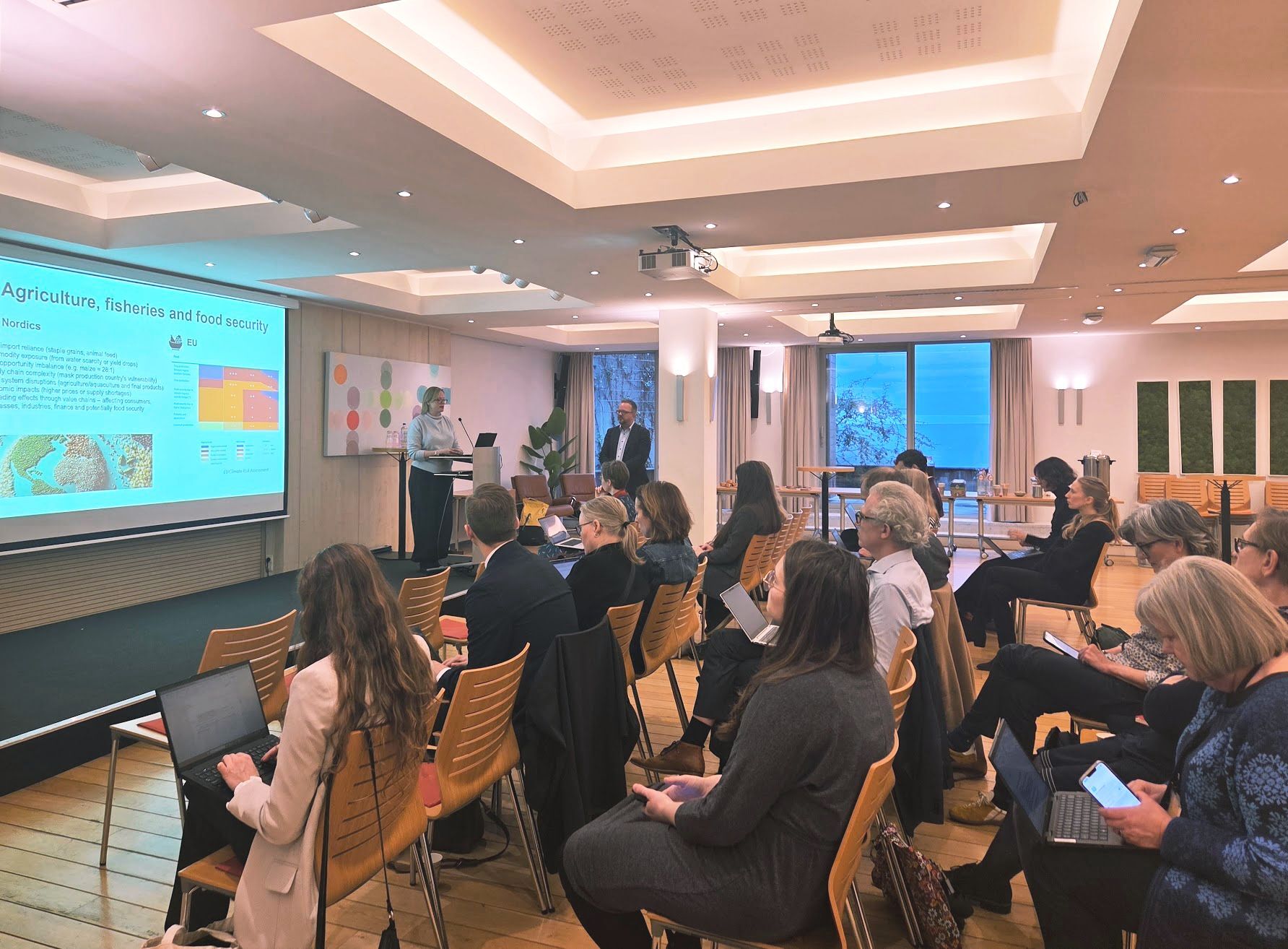
This January - as the European Commission develops a new integrated framework for European climate resilience and risk – representatives from CROSS CASCADE travelled to Brussels at the invitation of the Nordic Programme for Climate Adaptation to join a seminar on advancing climate resilience in Europe. The objective was to present Nordic perspectives and priority issues that can strengthen Europe’s capacity to prepare for and adapt to a changing climate.
The Nordic Region – and Arctic areas in particular – are warming faster than the global average. This creates distinct challenges and places pressure on vulnerable communities and ecosystems, prompting Nordic Co-operation on the Environment and Climate to prioritise international action on adaptation and resilience. At the event, we had the opportunity to present insights in cascading climate risks, highlight the need for closer international cooperation to manage these risks and promote their uptake in policy – including the European resilience agenda.
We demonstrated vulnerabilities linked to food security, critical raw materials, pharmaceuticals, and financial systems. We also discussed opportunities for the new integrated framework for European climate resilience and risk to better account for cascading climate risks and for coherent policy making to meet Europe’s security, climate and competitiveness goals together (e.g. via the EU Critical Entities Resilience Directive, Preparedness Union strategy and EU Defence readiness roadmap).
The programme also highlighted the effect of climate change on Sámi culture and reindeer husbandry. Elle Merete M. Omma, Head of the Saami Council EU Unit, shared the increasingly difficult conditions reindeer herders are facing due to climate change and mitigation measures across the Nordic region. She emphasised the deep cultural and social dimensions of Sámi livelihoods and their strong connection to their homelands: an important reminder that adaptation strategies must integrate Indigenous Knowledge.
The seminar underscored the urgent need to translate knowledge into concrete measures that strengthen resilience across borders and allow for coordinated adaptation planning. This built on key messages from the 7th Nordic Conference on Climate Change Adaptation:
- Climate justice is a central pillar of adaptation, particularly in the Arctic, where Indigenous Peoples and rural communities face disproportionate impacts.
- Including young people in decision-making is essential for intergenerational equity and transformative change.
- Climate security is becoming a strategic priority, requiring us to integrate climate risks into national and regional security frameworks enhances preparedness, foresight, and cooperation.